


Last Thursday I was in the least technology based TeachMeet I have ever attended, #TMBristol. I was very surprised to discover the low tech theme, since @ICTEvangelist was one of the organisers, but I am glad he went for that, as the whole evening ran very smoothly and presentations were nice and short. This doesn’t mean there was not quality! Quite the opposite actually. There were some really cool and simple ideas shared that could be used in the classroom the day after. No need to get used to a new tool, prepare lots of resources, etc… Just good, plain teaching and learning!
One presentation really got my cogs to work vigorously as soon as I saw it, though! Miss McDonagh’s Loyalty Cards. Her idea is so simple, yet so engaging that it immediately made me think about applications to the Literacy and Numeracy Framework (LNF) in Wales. Basically, the loyalty cards have a set of skills on one side and spaces for a teacher to stamp a circle when a skill is demonstrated by a student. Just like loyalty cards in cafes, etc… When a card is completed students can earn a prize.
I thought this approach would work wonderfully for the LNF in Wales across the whole framework, but in particular for the Numerical Reasoning strand in the Numeracy Framework. In fact, because the skills statements are the same across whole phases and key stages in the Numerical Reasoning strand you would only need to make three sets of cards to cover all year groups.
What I really like about this idea is its versatility, as it has many uses. Firstly, it encourages learners to take more responsibilities for their own learning. I would recommend you get them to look out for the skills they are demonstrating in their work and come to you to get stamps. You could even play the “mean teacher” and get the children to argue and convince you they deserve the stamp. This could actually be quite productive, as it would encourage them to reflect on their work and articulate how it shows development of numerical reasoning skills (there is some good oracy there too). So, your Loyalty Cards can become an AfL tool that encourages self-assessment, but it can also be a powerful assessment and tracking tool. In fact, you could sign and date each stamp (like many cafes do with their cards) and you have a record of what skills and how often a child has demonstrated their use. The students are not likely to lose these cards, if you make your treats enticing enough 😉
The other thing I deliberately did in the examples below was to leave out some of the skills from the Numerical Reasoning strand and the reason is that schools could create their own loyalty cards according to the skills they want to focus during a particular period of time. It is about deconstructing the framework in light of the needs identified by your school through a range of data sets and focusing on the skills that need to be developed most across the school, a year group, etc… In this way the learners will also focus on those skills as part of their independent learning and self-assessment and real improvement can be achieved.
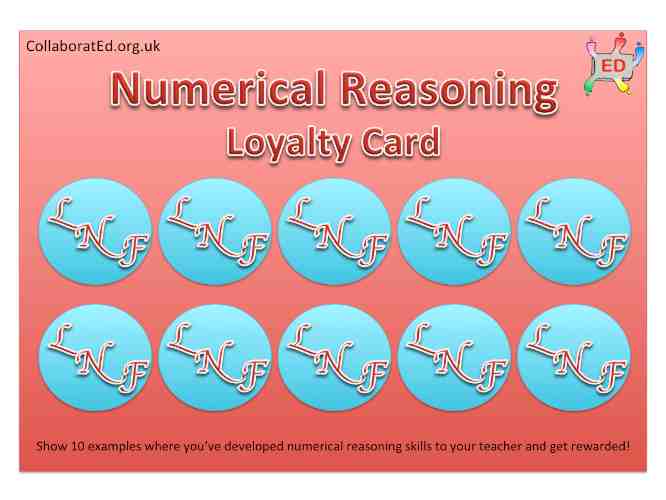
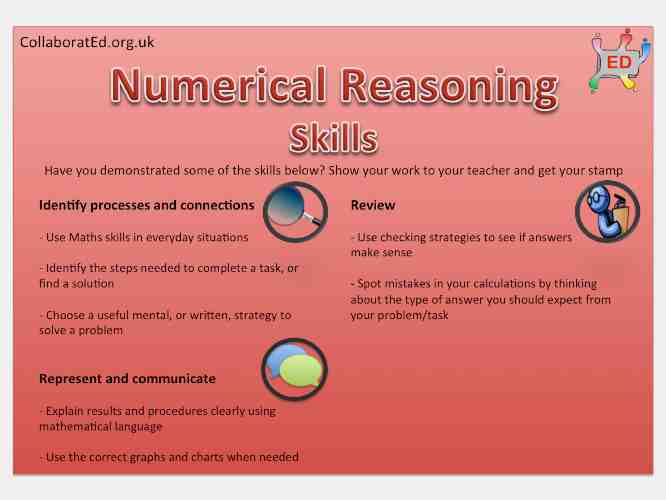
I have also modified the skills statements slightly to make them a bit more child friendly. I can share the PowerPoint template I used to make these, so get in contact, if you’d like to have it and use it with your learners. I would love to hear how these are being used and what impact they are making in your school, so leave a comment below, please.





Recent Comments